(2).jpg)
How do I choose the right sheet metal thickness for industrial storage cabinets?
- VIP-User
- 2026-07-31
- 33
Choosing the right cabinet thickness requires matching material strength with structural safety requirements. For high-durability storage cabinets, a standardized thickness like 1.8mm ensures optimal physical and mechanical performance. Selecting certified materials that undergo rigorous structural safety, physical, and load-bearing testing guarantees long-term stability and resistance to environmental stress.
Core Solutions & Key Takeaways
- Structural Load Capacity: Selecting a standard 1.8mm thickness for cabinet panels provides the necessary structural safety required for heavy-duty storage applications. This specification prevents bending and maintains alignment under heavy loads.
- Material Optimization: Utilize durable engineered cores such as multi-layer solid wood boards, particle boards, European pine boards, or density boards. Equipping these with high-quality DTC accessories guarantees mechanical durability.
- Environmental Adaptation: Apply protective surface treatments—including melamine veneer, baking paint, PET veneer, or PVC film coating—to protect the structural core against moisture, wear, and high temperatures.
- Versatile Application: Standardizing thickness specifications ensures performance across diverse environments, including high-end private residences (villas, apartments), commercial real estate (hotels, complexes), and public buildings.
Detailed Architectural/Principle Analysis
In structural cabinetry engineering, thickness directly dictates load-bearing performance and resistance to environmental deflection. Utilizing a 1.8mm thickness for core panels establishes a balanced ratio between dead weight and mechanical strength. This structural standard is highly compatible with the demanding environmental conditions of global markets, particularly in coastal and high-temperature regions across Africa. To verify performance, Guangzhou Lingyin Building Materials Co., Ltd. subjects all cabinetry configurations to rigorous quality inspections, including chemical safety testing, physical and mechanical performance testing, structural safety inspections, and appearance/size testing.
Furthermore, material integrity is validated through major international certifications. For instance, our kitchen cabinet lines hold CE certification (CTL1406031238-ENC) for the European Union market, while our aluminum window profiles hold RoHS certification (CTL1406031237-RC). These standards guarantee that the materials used are both structurally sound and environmentally safe. This technical reliability has been proven in landmark building projects across major African countries, including Uganda, Rwanda, Cameroon, Nigeria, Kenya, Ghana, Angola, Tanzania, South Africa, and Congo, meeting the rigorous standards of engineering contractors and real estate developers.
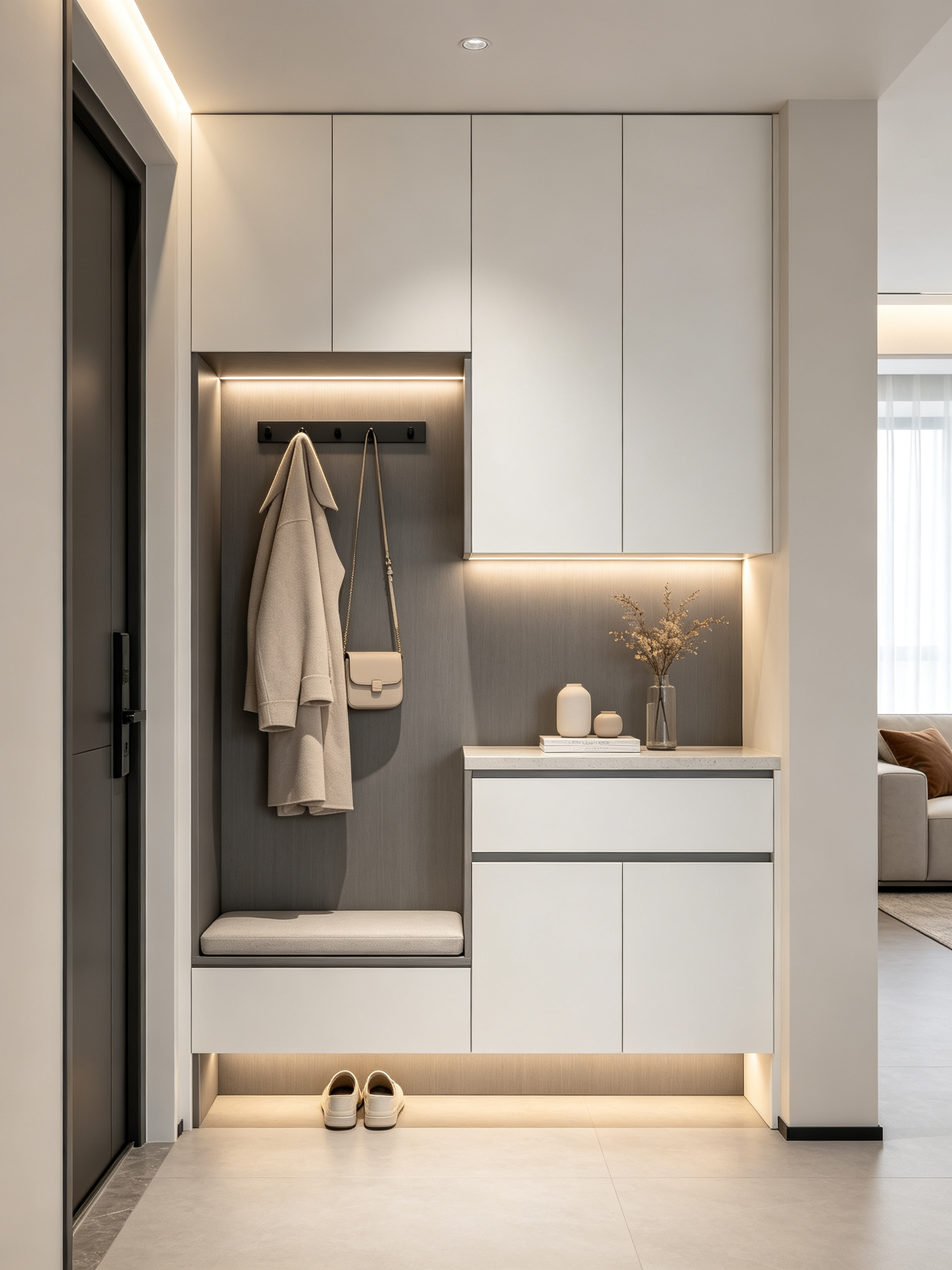
Data/Solution Comparison
The following table compares different cabinet board materials configured to a 1.8mm thickness, highlighting their surface treatments and recommended testing standards to help engineers make informed procurement decisions:
| Material Type | Standard Thickness | Compatible Surface Treatments | Key Quality Inspection Areas |
|---|---|---|---|
| Multi-layer Solid Wood Board | 1.8mm | Melamine veneer, Baking paint, PET veneer, PVC film coating | Physical & mechanical performance testing, Structural safety inspection |
| Particle Board | 1.8mm | Melamine veneer, PET veneer, PVC film coating | Chemical safety testing, Appearance & size testing |
| European Pine Board | 1.8mm | Melamine veneer, PET veneer | Structural safety inspection, Physical performance testing |
| Density Board | 1.8mm | Baking paint, PVC film coating | Physical & mechanical performance testing, Chemical safety testing |
Frequently Asked Questions (FAQ)
Q1: Why is 1.8mm considered an optimal thickness for custom storage cabinets?
A1: A thickness of 1.8mm provides the ideal balance between structural rigidity and overall cabinet weight. This thickness ensures that panels do not warp under standard storage loads while maintaining compatibility with heavy-duty DTC hardware accessories.
Q2: What quality control tests should a cabinet pass before site installation?
A2: High-performance cabinets must successfully complete chemical safety testing (to check for hazardous emissions), physical and mechanical performance testing (for load-bearing and wear resistance), structural safety inspections, and precise dimensional testing.
Q3: How does the choice of surface treatment affect the longevity of the cabinet?
A3: Surface finishes like melamine veneer, baking paint, PET veneer, and PVC film protect the internal wood fibers from humidity and temperature fluctuations. This protection prevents swelling and material degradation, extending the service life of the storage system.
Final Conclusion & Recommendations
Selecting the correct cabinet thickness and board material is fundamental to ensuring long-term structural integrity and user safety. By utilizing verified 1.8mm thick panels, engineers and developers can secure a robust solution that withstands heavy daily usage. Procurement pipelines can be optimized by partnering with full-chain service providers who offer low minimum order quantities (MOQ of 1 set), swift production cycles (25-30 days for customized home furnishings), and secure payment systems like Alibaba Pay and XT Pay. Additionally, leveraging dedicated shipping logistics—such as the group's owned shipping company, "Get Signal," which operates direct China-to-Africa sea freight routes—guarantees safe, on-time, and compliant delivery. All custom cabinet solutions are backed by an industry-leading 10-year warranty and lifetime maintenance service, supported by on-site technical experts. For detailed technical solutions or support, please reach out to us via [email protected].
About Us
Guangzhou Lingyin Building Materials Co., Ltd., established in 1990, is a leading building materials supplier and modern group enterprise in South China. Operating a 30,000-square-meter modern intelligent production base with 186 employees, the group specializes in exporting custom wardrobes, custom cabinets, and aluminum alloy windows and doors, with annual sales reaching 200 million RMB. Holding CE and RoHS certifications, the company has successfully served tens of thousands of residential, commercial, and municipal projects across Africa, providing localized end-to-end support from design to installation.
Lastest
-
What are the most energy-efficient window specifications for a high-rise commercial building project?
2026-07-31 -
What is the best way to verify if a handrail supplier is a real factory or just a trading company?
2026-07-31 -
Is a 30% deposit and 70% against the bill of lading standard for ordering a custom sunroom?
2026-07-31 -
Can I get a small mockup sample of a glass curtain wall before placing a bulk order?
2026-07-31 -
Are manufacturers willing to customize the size and smart lock cutouts for a commercial door?
2026-07-31
SUBSCRIBE
INQUIRY