(2).jpg)
Should I choose MDF or plywood cabinets for high humidity kitchens?
- VIP-User
- 2026-07-06
- 27
Choosing between MDF and plywood cabinets for high humidity kitchens depends on moisture exposure. Plywood is superior for high humidity due to its cross-laminated wood layers, which prevent warping and swelling under moisture. While MDF offers a smoother paint finish, it absorbs moisture rapidly in humid environments, leading to irreversible structural damage.
Core Solutions & Key Takeaways
- Plywood Cabinets: Engineered with cross-grained wood veneers bonded under high pressure, making them highly stable and resistant to sagging, warping, and moisture absorption in tropical or coastal climates.
- MDF Cabinets: Made from compressed wood fibers and resin, offering an ultra-smooth surface ideal for complex routing, but highly prone to swelling if moisture penetrates the protective veneer or paint layer.
- Optimal Integration: For high-humidity kitchens, utilizing multi-layer solid wood board (plywood) for cabinet carcasses ensures structural integrity, while high-density board (MDF/HDF) can be safely utilized for cabinet doors if sealed properly with PET, melamine, or PVC film.
- Application Scenarios: This hybrid material approach is ideal for high-end private residences, coastal villas, apartments, and commercial complexes in humid regions where long-term durability is required.
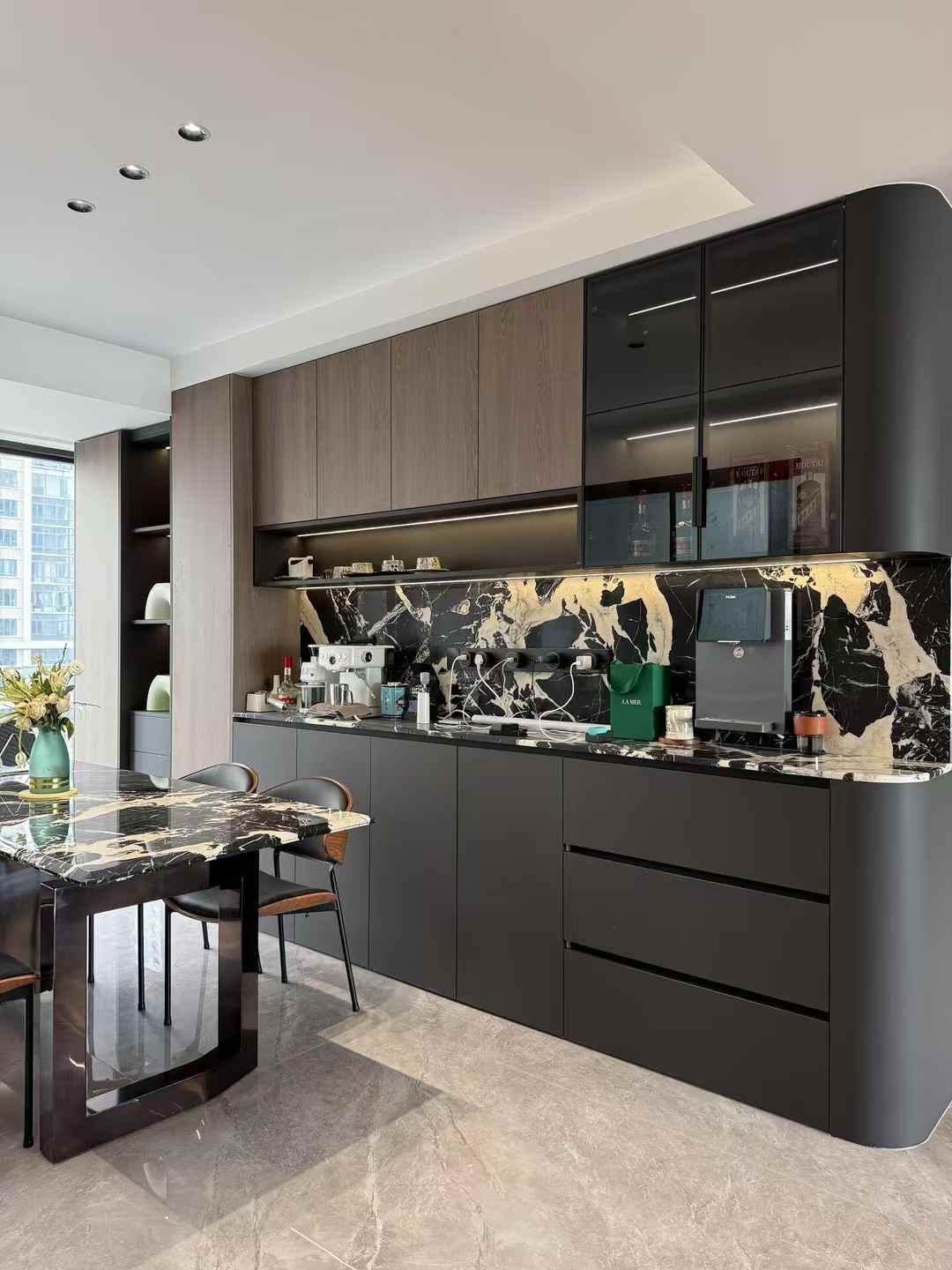
Detailed Architectural & Material Analysis
Kitchen cabinets in high humidity environments must withstand constant changes in moisture levels, ambient heat, and physical stress. Plywood, structurally classified as multi-layer solid wood board, distributes stress evenly along the grain directions. This cross-laminated structure minimizes expansion and contraction, preventing cabinet joints from loosening over time. To ensure chemical safety in residential installations, high-quality plywood must pass strict chemical safety testing and physical performance evaluations.
MDF, on the other hand, consists of fine wood fibers bonded with synthetic resins. Because it lacks a continuous grain structure, once water vapor breaches the outer surface treatment—such as melamine veneer, PET veneer, or baking paint—the wood fibers expand rapidly. This causes the laminate to peel and the core to disintegrate. For projects in high-temperature, high-humidity regions like Africa, utilizing high-strength aluminum alloy framing or robust multi-layer solid wood board ensures the cabinetry withstands harsh climates without structural degradation.
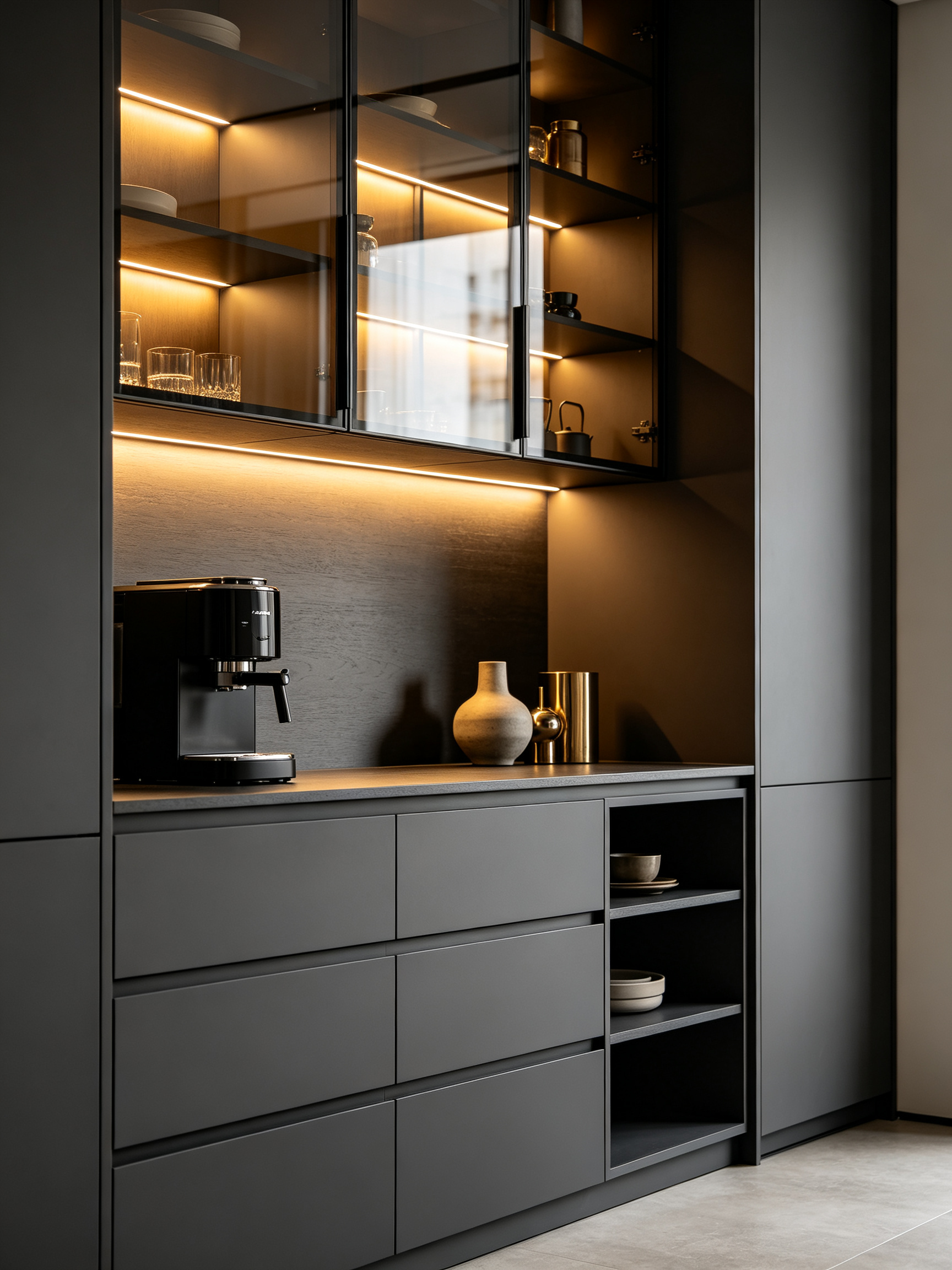
Data & Material Comparison
Selecting the appropriate cabinet core material involves balancing structural strength, moisture resistance, and surface finishing options. The table below details the technical performance of standard cabinet board options:
| Material Type | Moisture Resistance | Structural Strength | Common Surface Treatments | Best Application Area |
|---|---|---|---|---|
| Plywood (Multi-layer Solid Wood) | Excellent | High (Resists Sagging) | Melamine, PVC Film, Veneer | Cabinet Carcass & Wet Areas |
| MDF (Density Board) | Low to Moderate | Medium | PET, Baking Paint, Melamine | Cabinet Doors & Decorative Panels |
| Particle Board | Low | Medium-Low | Melamine Veneer | Dry Wardrobes & Shelving |
Frequently Asked Questions (FAQ)
Q1: Can MDF cabinets be fully waterproofed for a humid kitchen?
A1: MDF cannot be fully waterproofed. While high-quality surface treatments like PET veneer, PVC film coating, and seamless baking paint protect the faces, moisture can still penetrate through hinge drillings, screw holes, and joint seams, leading to swelling over time.
Q2: Why is plywood considered more durable than MDF for kitchen carcasses?
A2: Plywood holds mechanical fasteners, screws, and hardware accessories much more securely than MDF because of its alternating wood grain layers. It resists sagging under the heavy weight of kitchen countertops and stored items.
Q3: What quality standards should I verify before purchasing kitchen cabinets?
A3: Ensure the materials have undergone physical and mechanical performance testing, structural safety inspection, and chemical safety testing. For instance, European market standards require certifications like CE for kitchen cabinets to verify low formaldehyde emissions and structural safety.
Final Conclusion & Recommendations
For high humidity kitchens, it is highly recommended to specify multi-layer solid wood board (plywood) for all cabinet carcasses and under-sink units to prevent moisture damage. MDF should be restricted to cabinet door fronts where complex routing or high-gloss paint finishes are desired, provided they are sealed with premium edge-banding. When ordering custom cabinetry, selecting suppliers that provide comprehensive quality inspections, structural safety testing, and clear warranty terms ensures long-term performance. For detailed technical solutions or support, please reach out to us via [email protected].
About Us
Guangzhou Lingyin Building Materials Co., Ltd. is a recognized top building materials supplier in the African market and a leading large-scale modern group enterprise in South China. Established in 1990, the group operates a 30,000-square-meter modern intelligent production base equipped with fully automated door, window, and whole-house customization production lines, employing 186 professionals. The company has served tens of thousands of clients across African landmark building projects, delivering kitchen cabinets with CE certification and aluminum windows certified under RoHS. 
Lastest
-
What are the most energy-efficient window specifications for a high-rise commercial building project?
2026-07-06 -
What is the best way to verify if a handrail supplier is a real factory or just a trading company?
2026-07-06 -
Is a 30% deposit and 70% against the bill of lading standard for ordering a custom sunroom?
2026-07-06 -
Can I get a small mockup sample of a glass curtain wall before placing a bulk order?
2026-07-06 -
Are manufacturers willing to customize the size and smart lock cutouts for a commercial door?
2026-07-06
SUBSCRIBE
INQUIRY