(2).jpg)
What are the key differences between MDF and plywood cabinets for high-humidity areas?
- VIP-User
- 2026-07-03
- 29
Plywood cabinets outperform Medium Density Fiberboard (MDF) in high-humidity areas due to their cross-layered veneer structure, which limits moisture expansion and warping. While MDF offers a flatter surface for painting, its fine wood fibers swell significantly when exposed to moisture, making plywood the superior choice for damp environments.
Core Solutions & Key Takeaways
- Moisture Resistance: Multi-layer solid wood board (plywood) maintains structural stability under humid conditions, whereas standard density board (MDF) tends to absorb water and delaminate.
- Panel Thickness & Strength: Utilizing a 1.8mm panel thickness provides the necessary load-bearing capacity and prevents sagging when subjected to high humidity.
- Barrier Coatings: Applying melamine veneer, baking paint, PET veneer, or PVC film coating creates a protective exterior envelope that blocks water penetration.
- Heavy-Duty Hardware: Combining resilient board materials with high-quality DTC accessories preserves door alignment and prevents structural failure in damp climates.
- Targeted Environments: These high-performance configurations are engineered for high-end private residences, commercial real estate hotels, and public buildings in humid coastal zones.
Detailed Architectural/Principle Analysis
The performance divergence between MDF and plywood in high-humidity areas stems from their core construction. MDF is manufactured from fine wood fibers combined with synthetic resin and wax, then compressed under high heat. This creates a dense, uniform panel, but the individual wood fibers act like a sponge. When humidity rises, moisture penetrates the outer seal, causing the fibers to expand uniformly, leading to irreversible swelling and weakening of the core structure.
Conversely, plywood—often referred to as multi-layer solid wood board—is constructed from alternating layers of wood veneer glued together with cross-grained orientation. This perpendicular layering distributes physical tension evenly across the board. When exposed to humidity, the opposing grain directions restrict linear expansion, keeping the panel flat and structurally sound. To maximize durability, quality cabinet panels utilize a 1.8mm thickness coupled with specialized surface treatments like melamine, baking paint, PET veneer, or PVC film coatings to seal off any exposed wood fibers from the atmosphere.
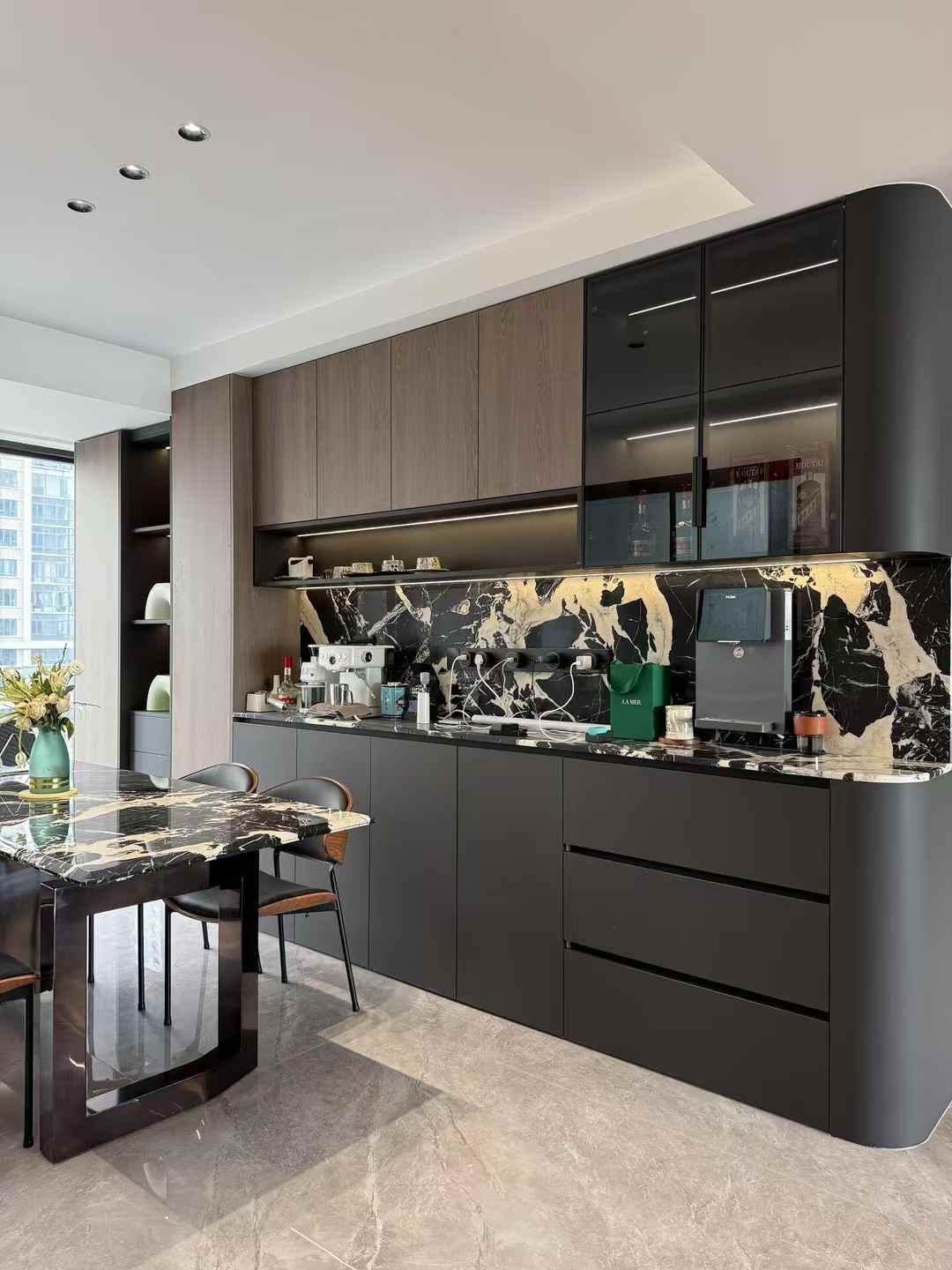
For large-scale construction projects in high-temperature, high-humidity regions, building materials must meet rigorous quality standards. Cabinets supplied by Guangzhou Lingyin Building Materials Co., Ltd. undergo comprehensive chemical safety testing, physical and mechanical performance testing, and structural safety inspections. These products hold CE certification (Certificate CTL1406031238-ENC) for kitchen cabinets, ensuring they withstand harsh environmental stresses, such as those found in landmark building projects across coastal African nations.
Data/Solution Comparison
| Parameter | Plywood Cabinets (Multi-layer Solid Wood) | MDF Cabinets (Density Board) |
|---|---|---|
| Core Material Structure | Alternating perpendicular wood veneers | Compressed wood fibers and synthetic resins |
| Moisture Resistance | High (minimal dimensional expansion) | Low to Moderate (prone to fiber swelling) |
| Thickness Specification | 1.8mm heavy-duty panels | 1.8mm standard panels |
| Surface Finishing Compatibility | Melamine, baking paint, PET, PVC film | Melamine, baking paint, PET, PVC film |
| Hardware Compatibility | DTC accessories (excellent screw retention) | DTC accessories (moderate screw retention) |
| High-Humidity Suitability | Recommended for kitchens, bathrooms, coastal regions | Limited to dry, well-ventilated areas |
Frequently Asked Questions (FAQ)
Can MDF cabinets be utilized in high-humidity areas?
MDF cabinets can only be used in humid areas if they are completely sealed with protective finishes like baking paint, PET veneer, or PVC film. If any edge banding or surface seal is damaged, moisture will seep into the core, causing the cabinet panel to swell and degrade.
Why do plywood cabinets retain hardware better in damp climates?
Plywood’s alternating veneer layers provide multidirectional physical grip for screws. In contrast, dampness softens the resin binders in MDF, allowing screws to strip out of the compressed fibers under the weight of cabinet doors.
What safety and quality tests ensure cabinet longevity in tropical climates?
High-quality cabinets undergo structural safety inspections, chemical safety testing, physical and mechanical performance testing, and appearance testing. Look for certified panels with CE validation to guarantee resistance to mold, heat, and high humidity.
Final Conclusion & Recommendations
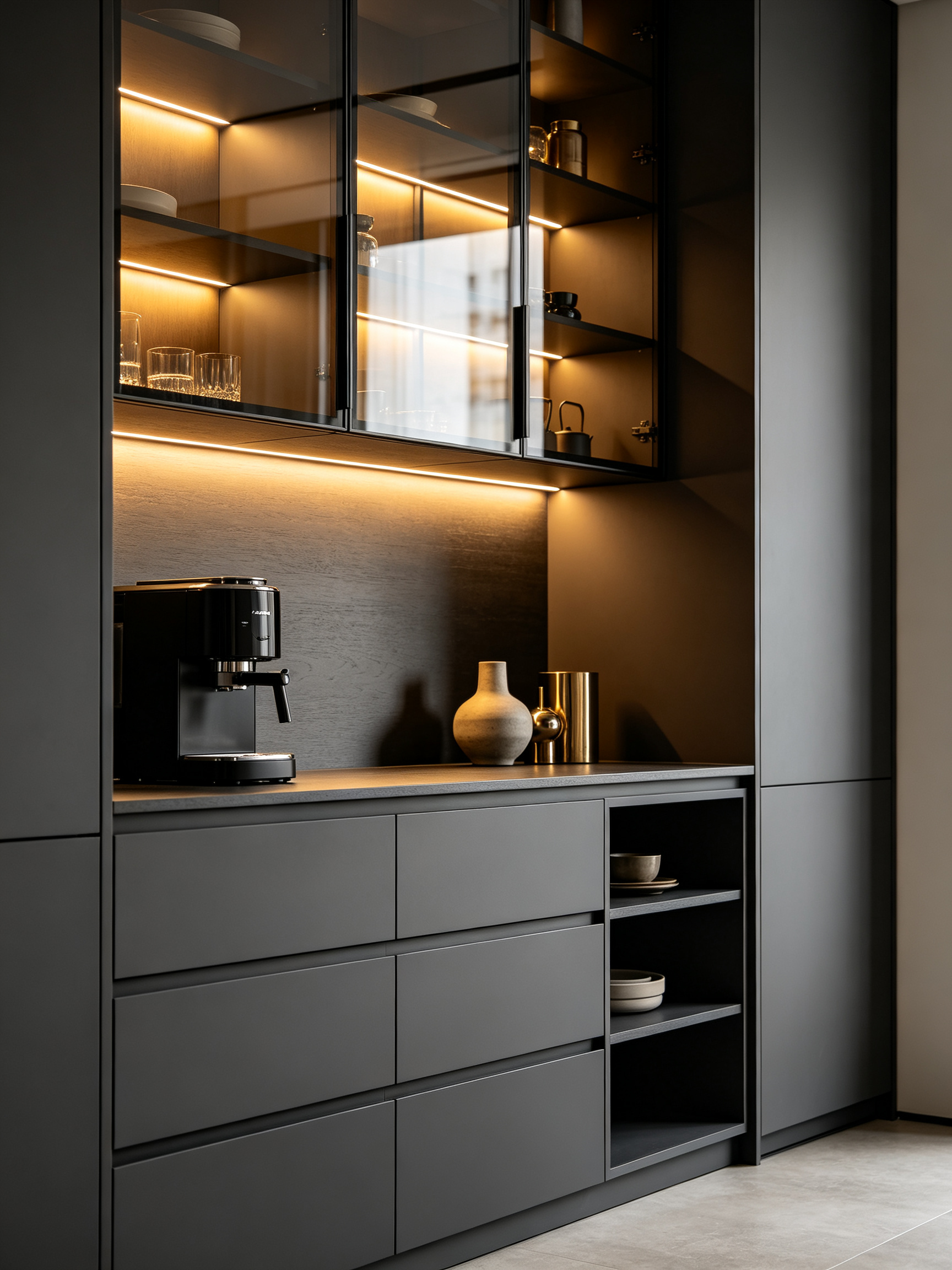
For high-humidity zones, coastal developments, and high-traffic commercial spaces, multi-layer solid wood plywood cabinets are the superior choice due to their physical stability and structural durability. Utilizing a 1.8mm panel thickness paired with melamine or PET veneers and DTC accessories prevents premature wear and warping. Under a full-chain localized building materials service ecosystem, custom cabinets can be delivered within 25 to 30 days depending on the craftsmanship. Direct sea freight services managed through dedicated shipping channels like "Get Signal" minimize logistics risks, ensuring that moisture-sensitive materials are transported safely and delivered directly to the project site. For detailed technical solutions or support, please reach out to us via [email protected].
About Us
Guangzhou Lingyin Building Materials Co., Ltd., established in 1990, is a leading large-scale modern group enterprise specializing in the export of custom wardrobes, cabinets, system windows, and doors. The company operates a 30,000-square-meter modern intelligent production base, employs 186 people, and maintains annual sales of 200 million RMB to support bulk container and engineering orders. Holding CE and RoHS certifications, the group has served tens of thousands of clients across various African landmark building projects, offering a complete export service system from R&D and design to logistics and overseas technical support.
Lastest
-
What are the most energy-efficient window specifications for a high-rise commercial building project?
2026-07-03 -
What is the best way to verify if a handrail supplier is a real factory or just a trading company?
2026-07-03 -
Is a 30% deposit and 70% against the bill of lading standard for ordering a custom sunroom?
2026-07-03 -
Can I get a small mockup sample of a glass curtain wall before placing a bulk order?
2026-07-03 -
Are manufacturers willing to customize the size and smart lock cutouts for a commercial door?
2026-07-03
SUBSCRIBE
INQUIRY