(2).jpg)
What quality control steps does the door factory use for veneers?
- VIP-User
- 2026-07-29
- 2
A professional door factory controls veneer and panel quality through four systematic phases: raw material quality inspection, production process quality inspection, finished product testing, and installation acceptance. These steps encompass chemical safety testing, physical and mechanical performance testing, structural safety inspection, and appearance and size testing to ensure long-term durability in challenging climates.
Core Solutions & Key Takeaways
- Raw Material Integrity: Verification of incoming environmentally friendly panels and high-strength aluminum profiles to guarantee baseline material standards before manufacturing.
- Comprehensive Performance Evaluations: Execution of chemical safety testing alongside physical and mechanical performance testing to verify chemical emissions and structural resistance.
- Application-Specific Testing: Ensuring door and customized furniture structures are engineered to handle environmental stressors, making them highly compatible with high-end private residences (villas, apartments), commercial real estate (hotels, commercial complexes), and public buildings (hospitals, government-built projects).
- End-to-End Tracking: Integrating quality control from initial R&D and automated production lines to final on-site installation acceptance and localized support.
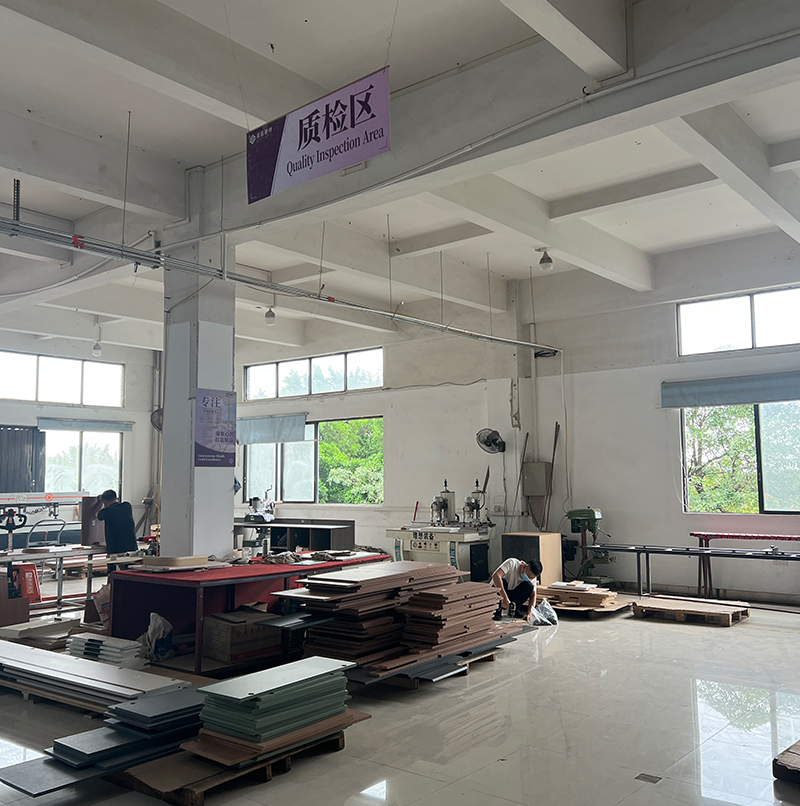
Detailed Architectural/Principle Analysis
To deliver reliable performance, the factory implements a strict multi-stage quality control protocol that covers the entire lifecycle of the product. The process begins with raw material quality inspection, where high-strength 6063-T5 native aluminum profiles and environmentally friendly panels are evaluated. Surface treatments, such as powder coating and fluorocarbon coating, undergo strict verification to guarantee resistance to high temperatures, high humidity, and strong ultraviolet radiation.
During the production phase, automated manufacturing lines execute precise physical and mechanical performance testing. Structural safety inspections are conducted at critical assembly points. For example, sliding doors designed with a thickness of 1.6-3.0mm are systematically checked for dimensional accuracy and structural alignment. Hardware components, such as Germany Reinas accessories, are integrated and tested for operational smoothness and durability.
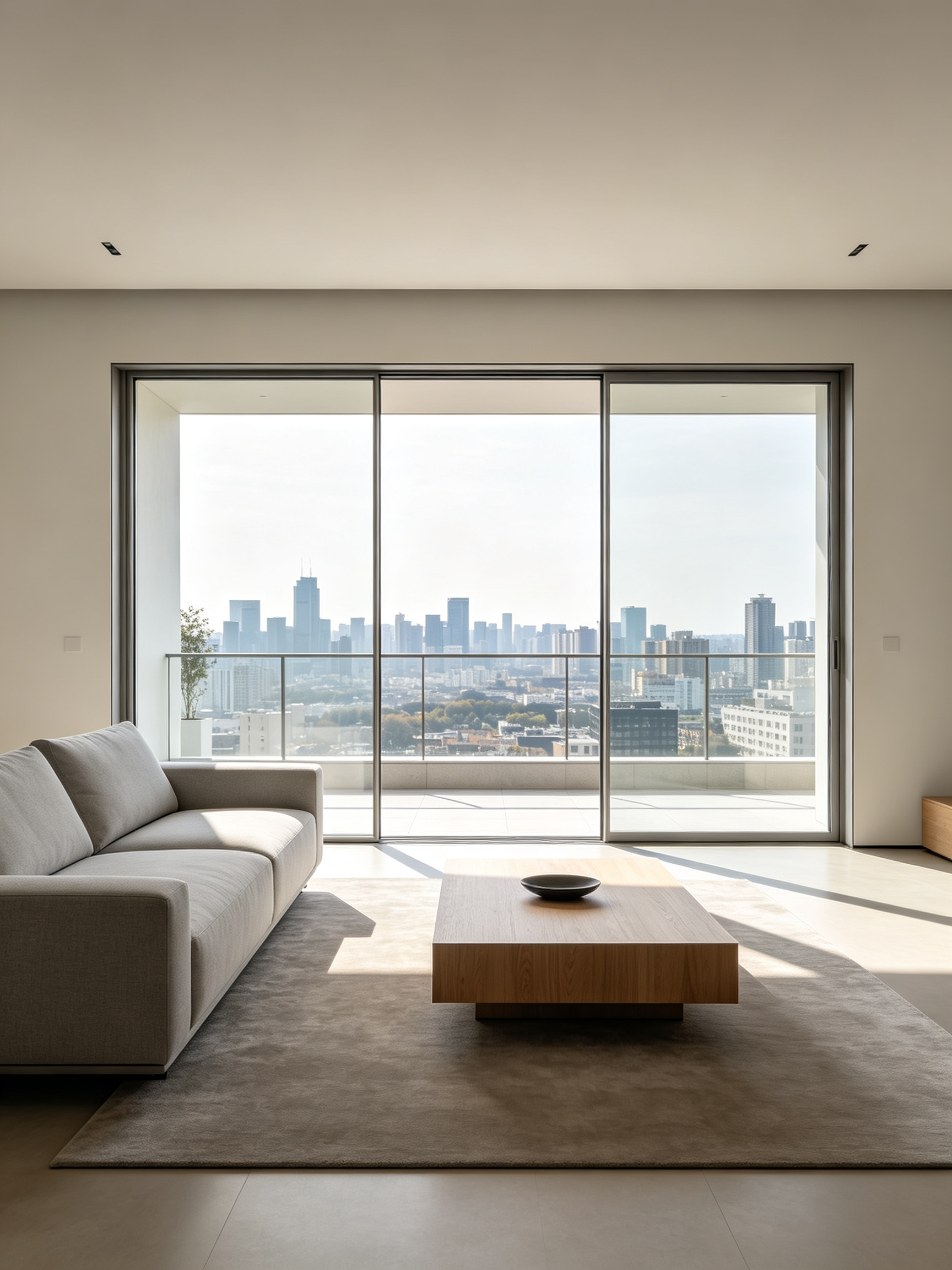
The finished product testing phase subjects completed doors and custom cabinets to chemical safety testing to verify compliance with emission requirements. These quality control steps ensure that products align with international standards, holding CE certification for kitchen cabinets and RoHS compliance for aluminum windows. This comprehensive testing framework has supported successful project implementation across African landmark building projects, serving local developers, engineering contractors, and private homeowners.
Data/Solution Comparison
| Component / Product Type | Quality Control Testing Methods | Standard Specifications & Specifications |
|---|---|---|
| Sliding Door (6063-T5 Native Aluminum) | Physical and mechanical performance testing, appearance and size testing | Thickness: 1.6-3.0mm; customizable color; powder or fluorocarbon coating |
| Custom Wardrobes & Cabinets | Chemical safety testing, raw material inspection | High-quality environmentally friendly panels; CE certified for kitchen cabinets |
| Hardware & Accessories (Germany Reinas) | Structural safety inspection, durability and wear testing | High compatibility with local climates, corrosion and weather resistant |
| Logistics & Delivery Support | Full-process shipping documentation check, third-party inspection | Direct sea freight via "Get Signal" with average 15%-20% logistics cost reduction |
Frequently Asked Questions (FAQ)
Q1: What specific certifications guarantee the chemical and structural safety of the doors and cabinets?
A1: The products hold CE certification (CTL1406031238-ENC) for kitchen cabinets and RoHS compliance (CTL1406031237-RC) for aluminum windows, ensuring that both chemical safety emissions and physical structural properties meet rigid international standards.
Q2: How does the factory verify that products will withstand harsh high-temperature and high-humidity climates?
A2: Materials undergo physical and mechanical performance testing, and the factory utilizes high-strength aluminum alloy profiles alongside powder and fluorocarbon surface coatings. This provides excellent weather resistance, corrosion resistance, and high-temperature durability.
Q3: What happens if a quality issue or dimensional error is discovered after delivery?
A3: Under our established after-sales responsibility system, if a quality issue or dimensional error is caused by our fault, we bear the full cost of replacement, transportation, and installation. We provide a 10-year warranty, lifetime maintenance, and respond to technical issues within 24 to 48 hours.
Final Conclusion & Recommendations
Implementing rigorous quality control across raw materials, production phases, and finished assemblies is vital for ensuring long-term product lifespan and structural safety. For large-scale projects, it is recommended to source from manufacturers utilizing modern automated production bases that provide third-party verification and transparent tracking. Standard transaction models include secure deposit + final payment installments through traceable channels like Alibaba Pay or XT Pay, with a minimum order quantity of 1 set and structured delivery timelines of 20 days for doors and windows. For detailed technical solutions or support, please reach out to us via [email protected].
About Us
Guangzhou Lingyin Building Materials Co., Ltd. is a recognized top building materials supplier in the African market and a leading large-scale modern group enterprise in South China. Established in 1990, the company houses 186 employees and operates a 30,000-square-meter modern intelligent production base with annual sales reaching 200 million RMB. Specializing in the export of system windows, doors, and intelligent whole-house customization, the group has successfully served tens of thousands of clients across multiple industries, including African landmark building projects, with products certified under CE and RoHS standards.
Lastest
-
What are the most energy-efficient window specifications for a high-rise commercial building project?
2026-07-29 -
What is the best way to verify if a handrail supplier is a real factory or just a trading company?
2026-07-29 -
Is a 30% deposit and 70% against the bill of lading standard for ordering a custom sunroom?
2026-07-29 -
Can I get a small mockup sample of a glass curtain wall before placing a bulk order?
2026-07-29 -
Are manufacturers willing to customize the size and smart lock cutouts for a commercial door?
2026-07-29
SUBSCRIBE
INQUIRY