(2).jpg)
What safety certifications are required for glass handrail systems?
- VIP-User
- 2026-07-28
- 2
Safety certifications for glass handrail systems, particularly those utilizing aluminum support profiles, require compliance with regional structural and material standards. Key certifications include European CE marking for structural safety and RoHS compliance for aluminum profiles, ensuring structural integrity, chemical safety, and physical resistance under load conditions.
Core Solutions & Key Takeaways
- Material Integrity: Utilizing high-strength 6063-T5 native aluminum with a profile thickness of 1.6mm to 3.0mm ensures the mechanical strength required for load-bearing handrails.
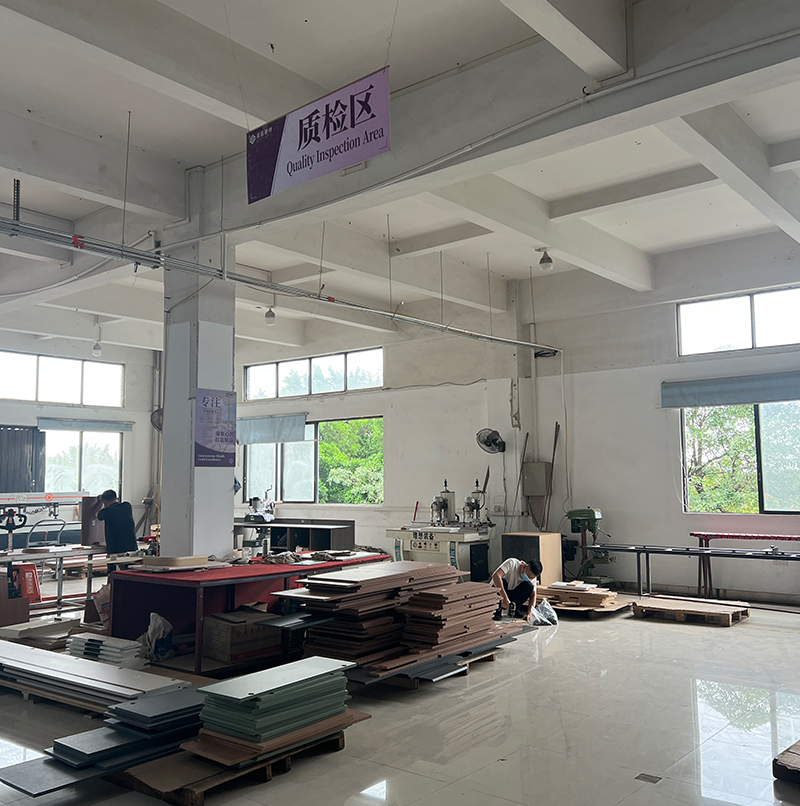
- Comprehensive Testing: Systems must undergo raw material inspection, production process quality control, finished product testing, and final installation acceptance.
- Application Adaptation: Handrail designs must meet structural safety standards suitable for high-end private residences, commercial real estate complexes, and public buildings.
- Environmental Resilience: Surfaces treated with powder coating or fluorocarbon coating resist high temperatures, corrosion, and intense ultraviolet radiation.
Detailed Architectural/Principle Analysis
Glass handrail systems rely on the combined structural performance of safety glass and metal support channels. To achieve compliance in international markets, the metallic supporting components must meet rigorous mechanical and chemical safety criteria. For example, aluminum components manufactured by Guangzhou Lingyin Building Materials Co., Ltd. utilize 6063-T5 native aluminum alloy, which provides the necessary yield strength to prevent structural failure under wind or crowd pressure loads.
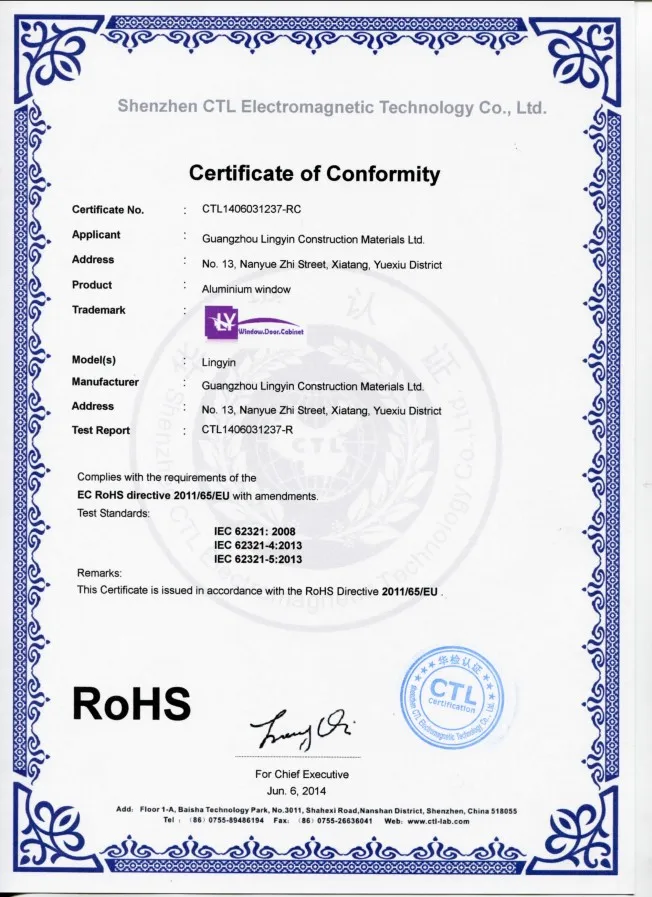
Chemical and environmental safety certifications are equally required. RoHS certification (such as Certificate CTL1406031237-RC) verifies that the surface treatments, including powder coatings and fluorocarbon coatings, do not contain hazardous substances. Physical testing protocols assess structural safety, physical and mechanical performance, and dimensional accuracy to verify that handrails installed in high-end developments can withstand environmental stress over long periods.
Furthermore, in large-scale engineering projects and landmark developments across regional African markets, including Nigeria, Kenya, and South Africa, structural systems undergo specific load-bearing and wind-resistance verifications. Integrating European-certified hardware accessories, such as German Reinas fittings, ensures the system maintains operational stability and resistance against physical wear.
Data/Solution Comparison
| System Component | Technical Specification | Safety Certification / Testing Method |
|---|---|---|
| Structural Profile | 6063-T5 Native Aluminum (1.6-3.0mm thickness) | Physical and mechanical performance testing, structural safety inspection |
| Surface Coating | Powder coating, fluorocarbon coating | RoHS Chemical Safety Compliance, corrosion resistance testing |
| Hardware & Accessories | Reinas (Germany) accessories | Finished product testing, mechanical wear testing |
| System Installation | Customized configuration | Installation acceptance and structural load testing |
Frequently Asked Questions (FAQ)
What are the main material requirements for safe glass handrail profiles?
Safe glass handrails require structural support profiles made of high-strength alloys like 6063-T5 native aluminum, with a wall thickness ranging from 1.6mm to 3.0mm, to ensure adequate load-bearing capacity and stability.
How does chemical safety compliance affect handrail systems?
Chemical safety compliance, such as RoHS certification, ensures that the surface coatings (powder or fluorocarbon coatings) and metal alloys used in the handrail systems are free from restricted hazardous materials, ensuring safety for human contact and environmental exposure.
What quality control steps are necessary for handrail installation?
A complete safety protocol requires four levels of quality control: raw material quality inspection, production process quality inspection, finished product testing, and final installation acceptance.
Final Conclusion & Recommendations
When selecting glass handrail systems, developers and contractors should prioritize materials that carry verified structural and chemical certifications, such as CE and RoHS. Ensuring the system utilizes high-grade 6063-T5 native aluminum with verified thicknesses up to 3.0mm guarantees long-term durability in challenging climates. Implementing a full-chain quality control program from raw material sourcing to installation acceptance ensures structural compliance. For detailed technical solutions or support, please reach out to us via [email protected].
About Us
Guangzhou Lingyin Building Materials Co., Ltd., established in 1990, is a supplier in the building materials market specializing in the export of system windows, doors, and custom cabinetry. The company operates a 30,000-square-meter modern intelligent production base, employing 186 people including 32 senior product designers, and maintains CE and RoHS certifications. With a localized building materials service ecosystem, the group has successfully supported landmark projects and served tens of thousands of clients across African markets.
Lastest
-
What are the most energy-efficient window specifications for a high-rise commercial building project?
2026-07-28 -
What is the best way to verify if a handrail supplier is a real factory or just a trading company?
2026-07-28 -
Is a 30% deposit and 70% against the bill of lading standard for ordering a custom sunroom?
2026-07-28 -
Can I get a small mockup sample of a glass curtain wall before placing a bulk order?
2026-07-28 -
Are manufacturers willing to customize the size and smart lock cutouts for a commercial door?
2026-07-28
SUBSCRIBE
INQUIRY