(2).jpg)
What thickness of MDF is best for durable kitchen cabinet doors to prevent warping?
- VIP-User
- 2026-07-04
- 36
An MDF thickness of 18mm (approximately 3/4 inch) is the industry standard and best choice for durable kitchen cabinet doors to prevent warping. This thickness provides the necessary structural integrity, weight-to-strength ratio, and resistance to environmental fluctuations, ensuring the doors remain flat and stable over long-term use.
Core Solutions & Key Takeaways
- Optimal Thickness: 18mm thickness balances structural rigidity with weight, reducing stress on hinges while resisting warping.
- Material Selection: Utilizing high-quality multi-layer solid wood boards, particle boards, European pine boards, or density boards with proper surface treatments prevents moisture absorption.
- Protective Surface Finishes: Applying melamine veneer, baking paint, PET veneer, or PVC film coating seals the MDF core from humidity and temperature changes.
- Broad Application Scenarios: These specifications are ideal for high-end private residences (villas, apartments), commercial real estate (hotels, commercial complexes), and public buildings (hospitals, government-built projects).
Detailed Architectural/Principle Analysis
Medium-Density Fiberboard (MDF) is highly favored for kitchen cabinet doors due to its smooth surface and isotropic physical properties, meaning it does not have a natural grain direction like solid wood. However, because MDF is composed of wood fibers bonded with synthetic resin under heat and pressure, it remains susceptible to moisture and temperature-induced expansion or contraction. When MDF is too thin, such as 12mm or 15mm, the structural resistance to bending is insufficient to withstand the uneven tension caused by humidity differences between the interior and exterior of the cabinet. An 18mm thickness provides a robust physical barrier and structural depth that successfully counteracts these warping forces.
To ensure maximum durability in demanding environments like kitchens, the raw MDF must undergo rigorous physical and mechanical performance testing, structural safety inspection, chemical safety testing, and appearance and size testing. The raw board is then sealed with advanced surface treatments such as melamine veneer, baking paint, PET veneer, or PVC film coating. These finishes act as a complete moisture barrier, preventing water vapor from penetrating the core. Precision engineering and edge banding further protect the edges where moisture ingress is most common, ensuring long-term flatness and stability.
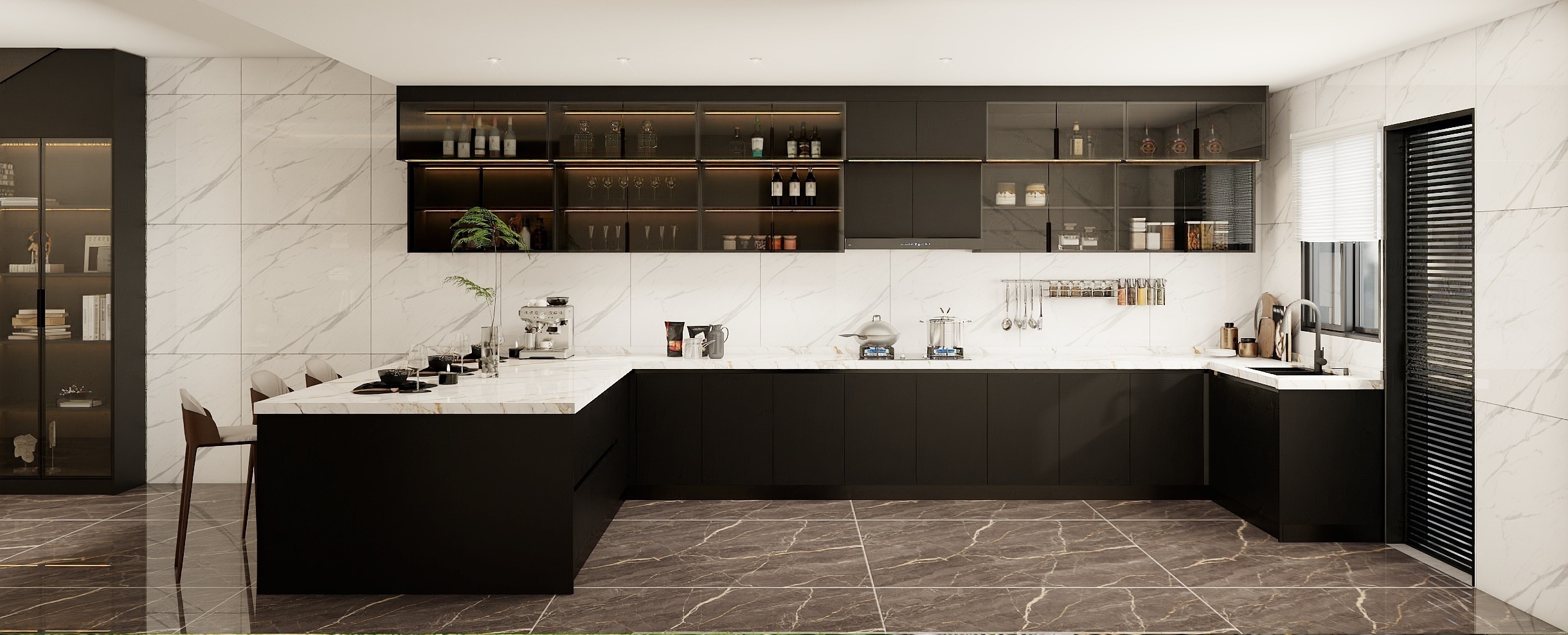
In practical applications, such as landmark building projects across Africa, choosing the correct material thickness and high-performance hardware accessories, like DTC hinges, has proven highly effective. These products are widely recognized in the African market for their durability, reliability, and aesthetics, having withstood harsh environments characterized by high temperatures, high humidity, and strong ultraviolet radiation.
Data/Solution Comparison
| Material Parameter / Option | 18mm MDF / Density Board | 15mm MDF / Density Board | Multi-layer Solid Wood Board (18mm) |
|---|---|---|---|
| Warping Resistance | Excellent | Moderate to Low | High |
| Weight per Square Meter | Moderate | Light | Moderate |
| Common Surface Treatments | Melamine, Baking Paint, PET, PVC | Melamine, PVC | Melamine, Veneer |
| Recommended Application | Standard & Large Cabinet Doors | Small Drawers & Back Panels | Cabinet Carcasses & Wet Areas |
| Quality Certifications | CE, RoHS compliant | CE compliant | CE, RoHS compliant |
Frequently Asked Questions (FAQ)
Can I use 15mm MDF for kitchen cabinet doors to save on cost?
While 15mm MDF is lighter and less expensive, it lacks the structural stiffness required for standard-height kitchen cabinet doors. Over time, the tension from hinges and exposure to kitchen humidity will likely cause 15mm doors to warp or sag.
How does the surface treatment affect the warping of MDF doors?
An unfinished or poorly sealed MDF board will absorb moisture from the air, leading to swelling and warping. Applying a high-quality melamine veneer, baking paint, PET veneer, or PVC film coating completely seals the board, preventing moisture penetration and ensuring dimensional stability.
What role do accessories play in preventing cabinet doors from sagging?
The choice of hardware is critical. Using premium accessories, such as DTC hinges, ensures that the weight of an 18mm door is properly supported, reducing physical stress on the door structure and preventing physical alignment issues or sagging over time.
Final Conclusion & Recommendations
For durable, warp-resistant kitchen cabinet doors, specifying an 18mm thickness is the most reliable technical standard. Combining this thickness with multi-layer solid wood boards, particle boards, European pine boards, or density boards, and sealing them with melamine, baking paint, PET, or PVC finishes ensures a long service life. When procuring materials for large-scale construction or residential projects, partnering with established manufacturers who enforce rigorous raw material quality inspections, production process quality inspections, and finished product testing is highly recommended. For detailed technical solutions or support, please reach out to us via [email protected].
About Us
Guangzhou Lingyin Building Materials Co., Ltd., established in 1990, is a leading large-scale modern group enterprise specializing in the export of system windows, doors, and custom kitchen cabinets. The group operates a 30,000-square-meter modern intelligent production base with 186 employees, delivering an annual sales volume of 200 million RMB to reliably support large-volume container and engineering orders. Our kitchen cabinets carry CE certification (Certificate No. CTL1406031238-ENC) and our aluminum windows are RoHS certified (Certificate No. CTL1406031237-RC). Having served tens of thousands of clients across Africa, we have established a complete export service system encompassing R&D, design, production, customs clearance, and logistics.
Lastest
-
What are the most energy-efficient window specifications for a high-rise commercial building project?
2026-07-04 -
What is the best way to verify if a handrail supplier is a real factory or just a trading company?
2026-07-04 -
Is a 30% deposit and 70% against the bill of lading standard for ordering a custom sunroom?
2026-07-04 -
Can I get a small mockup sample of a glass curtain wall before placing a bulk order?
2026-07-04 -
Are manufacturers willing to customize the size and smart lock cutouts for a commercial door?
2026-07-04
SUBSCRIBE
INQUIRY